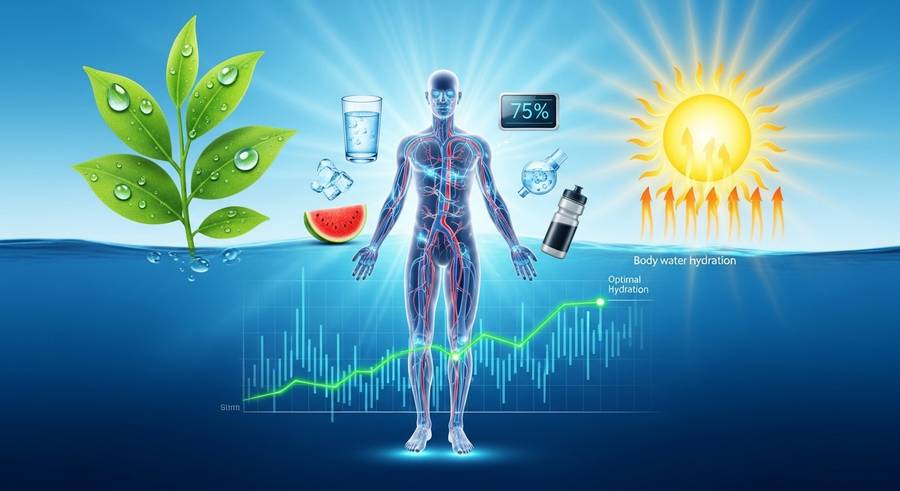
Why Hydration Matters
Water is essential for countless bodily functions. It plays a critical role in regulating body temperature, transporting nutrients, lubricating joints, and ensuring organs function properly. Dehydration, even in mild forms, can lead to fatigue, headaches, and decreased cognitive function.
Factors Influencing Hydration Needs
Your individual hydration needs are not static. They are influenced by several factors:
- Activity Level Increased physical exertion leads to greater fluid loss through sweat. The more intensely you exercise, the more you need to drink.
- Climate Hot and humid environments cause more sweating, thus increasing fluid requirements. Cold weather can also lead to dehydration if you're not accustomed to the drier air or if you're wearing heavy clothing that induces sweating.
- Diet Foods with high water content, like fruits and vegetables, contribute to your overall fluid intake. Conversely, a diet high in sodium can increase your need for water.
- Health Status Certain medical conditions, such as fever, vomiting, diarrhea, or kidney disease, can significantly alter your hydration needs. Some medications can also have a diuretic effect.
- Age Infants and older adults may have a reduced sense of thirst and are therefore at higher risk for dehydration.
Assessing Your Hydration Status
One of the simplest ways to gauge your hydration is by observing the color of your urine.
- Pale Yellow to Straw-Colored This generally indicates good hydration.
- Dark Yellow or Amber This can be a sign of dehydration.
- Colorless While seemingly ideal, very pale or colorless urine might suggest overhydration, which can also be problematic as it may dilute electrolytes.
Other indicators of dehydration include dry mouth, infrequent urination, dizziness, and fatigue.
Strategies for Optimal Hydration
- Listen to Your Thirst Thirst is your body's primary signal that you need to drink. Don't ignore it.
- Sip Throughout the Day Instead of drinking large amounts infrequently, aim for consistent sips of water throughout the day.
- Carry a Water Bottle Having water readily accessible makes it easier to stay hydrated.
- Incorporate Water-Rich Foods Include fruits and vegetables like watermelon, cucumbers, and oranges in your diet.
- Electrolyte Replenishment For prolonged or intense exercise, consider beverages that contain electrolytes to help replace what is lost through sweat.
- Adjust for Conditions Be mindful of your environment and activity level, and adjust your fluid intake accordingly.
Maintaining optimal hydration is a continuous process that requires awareness and proactive effort. By understanding your body's signals and implementing these strategies, you can support your overall health and well-being.
Ancient Chinese medicine reveals the surprising truth about when—and how—your body truly wants to be hydrated.
A Thought I Wanted to Share
I came across this idea and thought it was so interesting that I wanted to share it with you. The more I read, the more it made sense — especially how something as simple as when we drink water can make such a difference in how our body feels. Sometimes the smallest changes really do support us the most.
For most of our lives, we’ve been told that “drinking enough water” is the key to good health. But Traditional Chinese Medicine (TCM), a wellness system that has guided people for thousands of years, teaches something a little different. It’s not just how much water you drink — it’s when you drink it, how you drink it, and what temperature it is that matter most.
This ancient perspective is gentle, simple, and honestly… it just clicks.
Morning: Wake Up the Organs
Early morning is the time of the Large Intestine and Stomach in TCM. Drinking a warm glass of water when you wake up helps:
Rehydrate the tissues
Flush the system
Activate digestion
Get the chi (energy) flowing
Warm water welcomes your organs into the day. Cold water slows everything down.
Before Meals: Support Digestion
In Chinese medicine, digestion is compared to a cooking pot — it needs warmth to function at its best.
A small amount of warm water 20–30 minutes before meals help:
Prepare the stomach
Strengthen digestion
Prevent bloating
Support smoother nutrient absorption
On the other hand, sipping lots of icy water during meals may weaken digestion and slow the whole process.
Between Meals: Sip, Don’t Chug
TCM encourages gentle, steady hydration throughout the day.
Not chugging huge amounts, not overwhelming the stomach.
Slow, intentional sipping supports:
Better absorption
Balanced energy
More stable energy
A calmer stomach
Your body responds best to steady hydration, not sudden floods.
Evening: Protect Kidney Energy
The Kidneys hold your life force (jing) in Chinese medicine and are especially sensitive to hydration timing.
A glass of water in the early evening (before 7 PM) helps:
Support detox
Keep the body balanced
Prevent nighttime dehydration
Reduce late-night bathroom trips
But drinking a lot right before bed forces the kidneys to work when they're meant to rest.
Avoid Ice-Cold Water When Possible
A core belief in TCM is:
Cold slows and constricts. Warmth supports and flows.
Ice water can:
Weaken digestion
Slow nutrient absorption
Cause bloating
Restrict circulation
Warm or room-temperature water helps your body stay in harmony.
Hydration Should Change with the Seasons
Your body shifts with nature.
Summer:
More hydration
More electrolytes
More water-rich foods
Winter:
More warm drinks
Less cold/raw foods
More digestive support
Aligning with nature makes hydration more effective.
So How Much Should We Drink?
TCM doesn’t give strict numbers — it encourages awareness and balance.
Hydration feels right when you’re:
Energized, not fatigued
Clear-headed, not foggy
Moist, but not heavy
Comfortable, not bloated
Most people thrive with 7–9 cups a day, including teas, soups, fruits, and water-rich foods — but your own body tells the truth better than any rule.
Warm, steady sipping absorbs far better than chugging.
Final Thought
I’m learning that wellness doesn’t always come from big changes—sometimes it’s these tiny daily moments that truly make the difference. And if something this simple can help us feel better, flow better, and live with more ease, then it’s definitely worth trying.
Contact me
Table of Contents
ADVERTISEMENT

Nourish Your Body with Plant Power
Experience the vibrant essence of nature with Acumullit SA® drops, a revolutionary way to integrate the goodness of plant-based botanicals into your daily wellness routine. Our advanced Acumullit SA® technology unlocks the full potential of premium plant compounds, transforming them into highly bioavailable micro-particles. These powerful nutrient particles, carrying a natural negative charge, work in harmony with your body's cellular communication. Simply enjoy our delicious lozenge drops, crafted to support your plant-based lifestyle by enhancing natural detoxification, promoting a healthy immune response, boosting vitality, or supporting cognitive clarity, depending on the specific blend you choose. Embrace a more naturally vibrant you.