If you have not read the article on what happened to my daughter, CLICK HERE
The immediate aftermath of my daughter Melissa's TBI, especially after 2 long months when she emerged from a coma, is a period fraught with a unique kind of anxiety. Her physical recovery, while monumental, often leaves a vast landscape of unknowns regarding the cognitive and emotional "return" of the person I know and love. This phase is defined by the waiting game – waiting for signs, for recognition, for glimpses of the "Mimi" I remember. The question of "how much of my Melissa is really there?" is a profound and deeply personal one, and I know I am not alone in facing it.
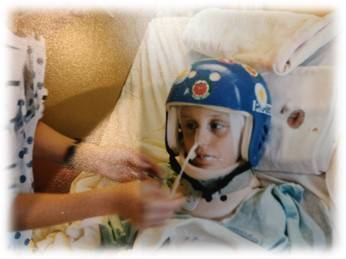
As soon as she woke up, she gave me a crooked smile. Although I was elated that she recognized me, the fact that only one half of her face smiled was terrifying at the same time. Within hours, the doctors had all kinds of specialists in her room "assessing" her. As a mom, I was like, WAIT… she just woke up.. let her rest! (Now I find that funny, as she was resting for two months!) None the less, she could not speak, and it was clear she was not understanding everything, but she could move both arms, legs, fingers, and toes! The decision was made that same day to move her to Children's Hospital for recovery, physical, as well as mental. We still had no idea how much she could remember, or how much she could relearn. At this point, I had a daughter who was at an infant level in a 13-year-old's body. She did have to wear her helmet ALL THE TIME due to the craniectomy; there was nothing protecting her brain but the skin. She hated it. Once we got settled into Children's, we were faced with a new reality.
Getting Settled into a New Reality
Entering the Children's Hospital marked a significant transition. This was no longer the sterile, albeit specialized, environment of the ICU. This was a place dedicated to healing and rehabilitation, but it also meant confronting the depth of Melissa's current state. I will never forget that same day we arrived; a psychiatrist came in, "evaluated" her, and stated she needed to be put on drugs. I was beside myself! I advocated for my child; mama bear came out. I said, "Why? We still have NO IDEA where she is mentally. I feel we should give it some time." I then told the neurologist I wanted a second opinion and that I did not want that psychiatrist to see her again! Thankfully, the next guy said, "Yes, you are correct, we need to find out first what her baseline is and go from there." I sighed in massive relief! The next few days were a blur of different specialists coming in to move all her body parts, see how many words she understood, teach her to start talking, using the bathroom, and yes, even feeding herself. It was overwhelming. She would spit, scream, bite, kick, and throw tantrums just like a two-year-old. It was then suggested that I speak with the counselors about "expectations," which worried me!
Being Told to Let Go of the Child I Gave Birth To
As a mom, how do you "let go" of the child you raised for 13 years? Honestly, it's like a death. I was told that Melissa is not and never would be the child I raised, that I needed to reconcile myself to the fact that, as of yet, we have no clue how much of her prior life she can recover. It was becoming clear day by day that she was not the same child. This broke my heart; I cried endless hours in private, put on a smile, and had to learn "who" this new Melissa was. All the while, still having to take care of my then 3-year-old Jessica, be mom, housekeeper, bottle washer, and hope to find time for grief, loss, and finding the inner strength to move forward each day.
Two Steps Forward, Four Steps Back
My life felt like a movie, and not a good one. Every time I thought we were making progress, there would be what seemed like insurmountable setbacks. Not just with Melissa, my marriage was falling apart, bills were mounting, I was a robot, just going through the motions. Sleep deprivation, weight gain, stress – and now, to top it off, the doctors said we could take Melissa home and do outpatient therapy. I could not even comprehend any of this. So, home we went. At least I was home, in my own bed, able to take care of my 3-year-old, and try to save my marriage… or so I thought. I did get a bit of a reprieve. The local counselors said that the local middle school had a "closed" classroom where each child is taught based on where they are at. She would be picked up each morning by bus (yes, the "special" bus as we used to call it when I was young) and brought home each afternoon. I did not have to supply food; they had physical therapists, speech therapists, psychiatric therapists, and everything that Melissa would need. Since it was a special education program, she would have everything she needed and she would stay in that classroom until she could, 1. graduate or 2. turn 21. After meeting the teachers and therapists, I was elated! So off to school she went!
Understanding Brain Injury and Recovery
The human brain is incredibly resilient, possessing a remarkable capacity for adaptation and reorganization, a concept known as neuroplasticity. Even after significant trauma, such as portions of the frontal lobes being removed, the brain can, to some extent, reroute neural pathways to compensate for damaged areas. However, the extent and nature of this rewiring are highly individual and depend on numerous factors, including the severity and location of the injury, the age of the individual, and the type and intensity of rehabilitation received.
PubMed Studies on TBI Recovery
Medical research offers insights into the complex processes of recovery from traumatic brain injury. Several studies available through explore various aspects of TBI, including the challenges of cognitive and emotional deficits following frontal lobe damage.
- Frontal Lobe Function: The frontal lobes are crucial for executive functions such as planning, decision-making, personality, social behavior, and impulse control. Damage to these areas can manifest in significant changes in personality, mood, and behavior, which can be particularly difficult for families to reconcile with their pre-injury understanding of the individual.
- Neuroplasticity and Rehabilitation: Research highlights that neuroplasticity is not limitless. While the brain can adapt, the degree of functional recovery is often influenced by the severity of the initial injury. Rehabilitation therapies, including cognitive behavioral therapy, occupational therapy, and speech therapy, play a vital role in maximizing the brain's ability to reorganize and relearn skills. Studies often emphasize the importance of early and intensive intervention.
- Predicting Recovery: Predicting the full extent of recovery from TBI is notoriously difficult. Factors such as the Glasgow Coma Scale (GCS) score at initial assessment, the duration of post-traumatic amnesia, and the presence of secondary injuries can offer some prognostic indicators, but the long-term trajectory remains highly variable. The "waiting game" I am experiencing is a testament to this inherent uncertainty.
The journey of recovery from TBI is often a marathon, not a sprint. It involves adapting to new realities, celebrating small victories, and continuing to advocate for the best possible care and support for Melissa.
Melissa's Journey Continues
A New Chapter Begins, the Road Ahead
Upon returning home, the reality of Melissa's recovery began to sink in. While the educational program offered immense support, the journey was far from over. The initial elation of finding the right program soon met the practical challenges of adapting to a new routine and the emotional toll that a traumatic brain injury, coupled with recent brain surgery, had taken on Melissa and our family. There were days filled with frustration as Melissa grappled with new cognitive and physical hurdles, and moments of doubt about the pace of her progress. These were the inevitable setbacks that accompany such a profound life event. We all had to learn to navigate these challenges with patience and resilience, understanding that recovery is not a linear path, but a series of steps forward, sometimes with a few steps back. The dedication of the school's staff, however, remained a constant source of hope, providing the structured environment and specialized care Melissa needed to continue her remarkable journey.
In my Next Article: Devastating news and more brain surgeries
If you did not read my first article on what happened CLICK HERE
Back to table of contents